D4DJ Groovy Mix
- 4.7
- Rating
- 1.00M
- Installs
- Free
- Price

 Analysis by App-foxy
I went into D4DJ Groovy Mix expecting a colorful anime rhythm game, but I stayed because its best moments come from building a steady playing habit rather than simply tapping through a few songs. It combines DJ-style presentation, character stories, collectible progression, and music-game timing in a package that feels much more like a long-term hobby than a quick arcade download. The free entry point helps, although the amount of content and the presence of in-app purchases mean it is worth approaching with a little self-control.
Developed by Donuts Co. Ltd., this music game is aimed at players who enjoy anime presentation as much as rhythm gameplay. It has an Everyone age rating, runs on Android devices using version 6.0 or later, and has reached over a million installs. The version I reviewed was 9.4.10, and the game has clearly grown into a substantial service rather than a small one-session title.
How the everyday play loop feels
My usual session starts with a simple decision: do I want to practice timing, make progress through the story, or spend a few minutes collecting rewards and improving my lineup? That choice matters because the game can feel relaxed or surprisingly demanding depending on how I approach it. A casual player can select a song and enjoy the presentation, while a more focused player can replay the same chart to clean up missed notes and chase a better result.
You May Also Like

 Blood Strike: 2.5 Anniversary
Blood Strike’s Loadouts Turn Every Drop Into a Tactical Gamble
A close look at Blood Strike’s custom loadouts: how fast access to signature weapons reshapes its battle royale rhythm, rewards preparation, and narrows the gap between fights.

 Pandora - Music & Podcasts
Pandora’s Music Is Easy to Start, but Harder to Recover
Pandora’s strength is its low-effort path from a seed to a station. Its weak spot is how much confidence it asks you to place in connection, setup, and quiet recovery.

 8 Ball Pool
 Is Built on Rivalries, Rematches, and Routine
A close look at the rivalries, rematches, shared routines, and unanswered safety questions that turn a quick pool match into a persistent mobile community.

 Samsung Music
’s Quiet Strength Is Playing What You Already Own
Its reach comes less from spectacle than from dependable access to a personal library. That simplicity is both the app’s strongest retention engine and its ceiling.

 AccuWeather: Weather Radar
AccuWeather Review: A Quick, Clear Forecast for Everyday Decisions
For everyday plans, the best forecast is the one you can understand quickly. AccuWeather makes rain timing, radar, and local conditions easy to act on, with a few trade-offs.

 Hill Climb Racing
Why Hill Climb Racing Still Turns Crashes Into One More Run
A tiny car, a bumpy hill and one more upgrade: Hill Climb Racing keeps resurfacing because its simple chaos makes every near-miss feel personal.
More From Our News Desk



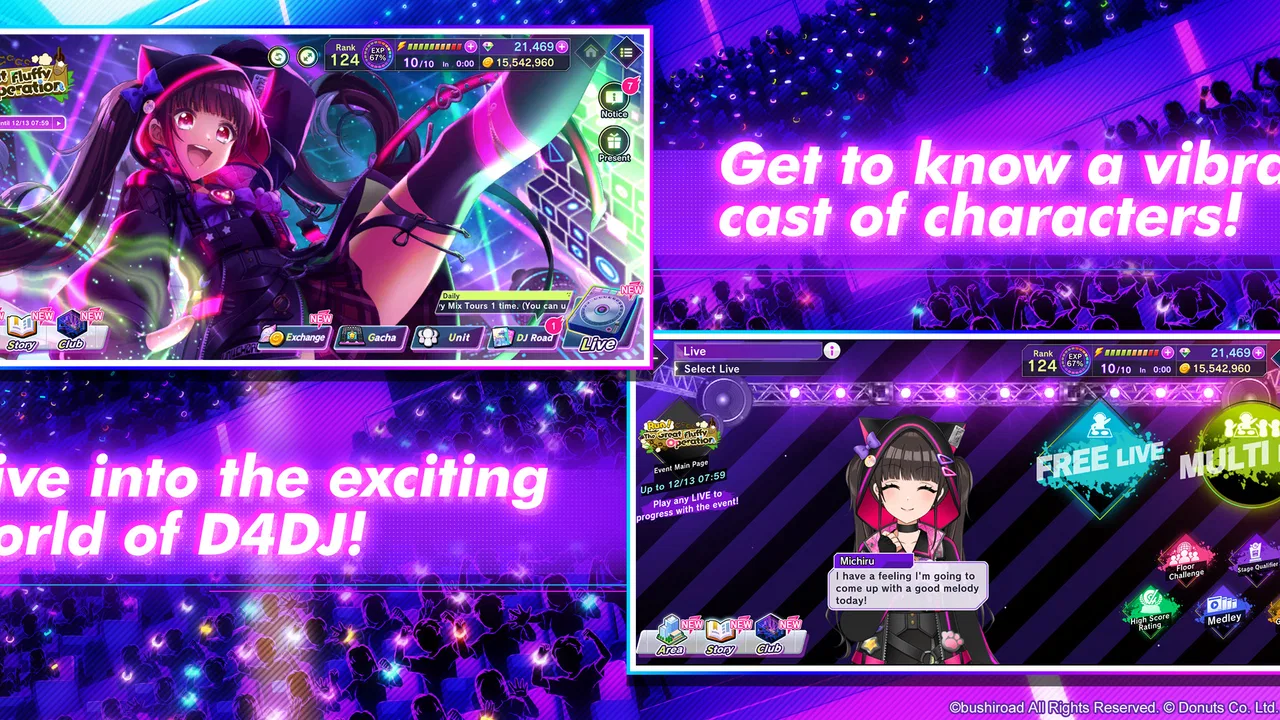
The central appeal is the relationship between the music and the visual identity of the units. It is not presented like a plain metronome exercise. The anime characters, dialogue, performances, and event-driven atmosphere give each session more context than a bare list of tracks. I found that useful when I wanted motivation to return, because progression is attached to a world rather than only to a score screen.
At the same time, the game asks for attention. Notes arrive across several lanes and can involve different kinds of input, so playing well depends on recognizing patterns instead of tapping randomly. The early stages are approachable, but higher difficulty quickly exposes uneven timing, poor hand positioning, or a tendency to watch the effects instead of the notes. I recommend beginning below your maximum comfortable level and increasing difficulty only after your inputs feel automatic.
A realistic use case is a short evening break. I might play one story segment, complete a few songs, and stop before the session turns into an unplanned spending or grinding loop. That works especially well when I treat each song as a small practice block. If I am tired, I choose a familiar chart rather than forcing a difficult one and ending the session frustrated.
A repeatable routine works better than random tapping
Experienced players will get more from a repeatable routine. I like to begin with a chart I already know, use it to settle my timing, then move to something unfamiliar. This gives me a reference point: if the familiar track feels difficult, I know my concentration or device conditions may be the problem rather than the new chart itself.
Another useful habit is separating score goals from progression goals. When I am trying to advance, I focus on completing songs consistently. When I am trying to improve, I replay a smaller selection and pay attention to the exact moments where I lose the beat. Mixing those goals in every session can make the game feel busier than it needs to be.
I also avoid changing several things at once. If I alter the note speed, audio balance, and difficulty together, I cannot tell which change helped. A better approach is to adjust one setting, play the same kind of chart, and keep the change only if it makes the notes easier to read without damaging my timing.
Settings that deserve attention before serious play
The first setting I would check is note speed. Faster movement does not make a song faster; it can simply spread incoming notes across more screen space, which may make dense patterns easier to read. I found that a moderate increase can reduce visual crowding, but going too far makes me react late because I am no longer comfortable reading the lane.
Audio balance is equally important. Rhythm games are much easier when the beat is clear enough to guide the hands, while excessive effects or voice volume can distract from the musical pulse. I prefer to test settings with a song I know well, because unfamiliar music makes it difficult to distinguish a bad mix from a bad timing choice.
Players using headphones should check the experience before committing to difficult charts. Any delay between sound and touch can make accurate play feel unfair, even when the real issue is the device or accessory. I do not treat a difficult song as a reliable calibration tool. I first use an easier chart, confirm that taps feel connected to the beat, and only then move upward.
Screen comfort matters too. Bright effects and animated performances are part of the appeal, but they can compete with the notes during busy sections. I find that lowering distractions, when the available options allow it, is more useful than chasing a dramatic visual presentation during practice. The goal is not to remove the personality of the game; it is to make the input lane readable.
Storage and battery planning are practical concerns for a game built around music, stories, and regular content. I prefer installing it on a device with comfortable free space and starting longer sessions with a good charge. That is not glamorous advice, but it prevents the worst kind of interruption: losing concentration because the phone is struggling or the session ends unexpectedly.
How I make difficult patterns more manageable
One of the most useful adjustments is learning to read patterns as groups rather than individual notes. When several inputs form a repeated shape, I try to recognize the movement and prepare my hand for the whole phrase. This reduces the feeling that I am chasing every note separately. It is especially helpful when a chart alternates between lanes in a predictable rhythm.
I also keep my hands relaxed. Tensing up may feel like extra control, but it usually makes repeated taps less consistent. A light grip and a stable phone position give me more room to recover after a mistake. If the device moves across the table, even a well-practiced pattern becomes harder, so I prefer a flat, secure surface or a case that does not slide easily.
For long sessions, I use a deliberate reset after a poor run. Instead of immediately replaying the same song with more force, I return to a comfortable chart or pause for a moment. This protects the habit of accurate timing. Repetition is valuable only when I am repeating a useful movement, not when I am reinforcing panic.
The game’s character and progression systems also affect how I choose my time. Improving a lineup can make progression feel smoother, but it does not replace learning the chart. I treat character development as support for the broader experience, not as a shortcut around rhythm practice. That distinction matters for anyone who assumes a stronger collection will automatically solve missed inputs.
Where the free model creates friction
The game is free to start, which makes it easy to try without a purchase. However, the progression structure includes optional in-app purchases ranging from $0.99 to $169.99 per item. That wide range is a reason to decide on a personal spending limit before browsing offers. I would not recommend opening the game casually when tired and making purchase decisions in the middle of a reward-driven session.
Players who enjoy collecting characters may feel more pressure than players who only want to play songs. The visual appeal and event atmosphere naturally encourage returning, checking rewards, and improving a favorite lineup. That is enjoyable when treated as a hobby, but it can become tiring if you feel that every session must produce something new.
There is also a difference between liking anime music culture and liking rhythm-game repetition. The story and presentation may attract someone who is not already a technical player, but the higher levels still demand practice. If you want a game where watching the performance is more important than making accurate inputs, this may not be the best fit. Conversely, if you want a completely stripped-down timing tool with no character collection or narrative layer, a simpler rhythm game may suit you better.
The amount of activity can be another limitation. A large game with stories, songs, rewards, and progression can feel overwhelming when you only have a few minutes. I recommend choosing one purpose before opening it: one song, one story segment, or one practice goal. That small boundary keeps the experience focused and makes it easier to stop.
Who will enjoy it most
I would recommend it to players who want a music game with a strong anime identity and enough progression to support regular play. It is particularly suitable for someone who enjoys replaying songs, improving timing gradually, and following character-focused content between performances. The free price makes experimentation easy, while the Everyone rating makes it approachable for a broad audience.
It is also a good choice for players who like having several ways to spend a session. You can approach it as a light rhythm game, a collection-focused title, or a story-driven anime experience with music at its center. Those layers do not all need equal attention. I often enjoy it most when I let one layer lead and allow the others to support it.
I would suggest caution for anyone who dislikes repeated songs, collectible progression, or optional purchases. The game is not a replacement for a pure practice app, and it is not ideal if you want every important reward to arrive without patience. Players with older or less comfortable devices should also pay attention to touch response and screen readability before judging their own ability.
How it compares with simpler rhythm games
Compared with a minimal rhythm title, this game offers more context around each performance. The characters and presentation give me a reason to return beyond improving a number. That makes it more inviting for anime fans, but it also means more menus, progression decisions, and distractions than I would find in a straightforward score-chasing game.
Compared with a traditional story-heavy mobile game, the music input is not just a background activity. It is the part that determines whether a session feels satisfying. The narrative and collection elements can encourage me to continue, but the strongest sense of achievement still comes from finally handling a chart that previously caused trouble.
That trade-off defines the audience. Someone looking for a compact game to play once a week may find the broader structure excessive. Someone who wants a continuing music hobby may appreciate having goals beyond a single high score. I think it sits comfortably between an anime character game and a serious rhythm challenge, without replacing either specialist option completely.
My verdict after building a steady habit
With an average rating of 4.7 from around 36 thousand ratings and more than a million installs, the game has attracted a sizeable audience, and I understand why. Its strongest quality is the way it turns rhythm practice into a broader anime music routine. The presentation gives ordinary replays more personality, while the chart difficulty leaves room to keep improving.
My advice is to begin slowly, calibrate the audio and note movement, and create a session routine that matches your real free time. Do not measure the game only by its most elaborate content or by the pressure to collect everything. Treat the songs as the foundation, use progression as motivation, and keep purchases separate from the excitement of a lucky reward.
After its release on May 26, 2021, it has developed into the kind of title that rewards returning players more than one-time visitors. I would choose it over a bare rhythm app when I want characters, atmosphere, and a longer-term reason to play. I would choose a simpler alternative when I only want immediate tapping with no collection decisions. For the right player, D4DJ Groovy Mix is a polished free starting point with real depth, provided you are comfortable practicing, managing distractions, and setting your own limits.
FAQs for D4DJ Groovy Mix
01What is D4DJ Groovy Mix, and how does it differ from other rhythm games?
D4DJ Groovy Mix is a captivating rhythm game that combines DJ-style music mixing with traditional rhythm gameplay. Unlike other rhythm games that may focus on single-note tracks, D4DJ Groovy Mix offers a unique multi-track experience where players can mix and match different music elements. This dynamic gameplay, coupled with a diverse music library, sets it apart by providing both challenge and creativity.
02How beginner-friendly is D4DJ Groovy Mix for new players?
D4DJ Groovy Mix is designed to be accessible to players of all skill levels. It features varying difficulty levels, from easy to expert, allowing beginners to start with simpler tracks and progressively tackle more challenging ones. The game also includes tutorials and practice modes to help new players familiarize themselves with the mechanics and improve their skills.
03What are the in-app purchase options in D4DJ Groovy Mix?
D4DJ Groovy Mix offers a range of in-app purchases to enhance the gaming experience. Players can buy virtual currency to unlock new songs, characters, and customization options. While these purchases can enhance gameplay, they are not mandatory. Players can still enjoy the game and progress through levels without spending money, though some content may take longer to unlock.
04Does D4DJ Groovy Mix require an internet connection to play?
Yes, D4DJ Groovy Mix requires a stable internet connection to fully enjoy its features. The game relies on online servers to provide a seamless experience, including access to its extensive music library, leaderboards, and events. While some offline features might be available, the full experience is best enjoyed with an active internet connection.
05What are the device requirements for running D4DJ Groovy Mix smoothly?
To run D4DJ Groovy Mix smoothly, you need a device that meets certain specifications. For Android, a device running on Android 5.0 or higher with at least 2GB RAM is recommended. For iOS, it requires iOS 10.0 or later. Ensuring your device meets these requirements will help prevent performance issues such as lag or crashes during gameplay.
Pros
- Engaging rhythm gameplay with diverse tracks.
- High-quality graphics and vibrant visuals.
- Regular events keep the content fresh.
- Customizable characters and outfits.
- Community features enhance social interaction.
Cons
- In-app purchases can be quite expensive.
- Requires a stable internet connection.
- May feel repetitive over time.
- Large storage space needed for downloads.
- Some features are region-locked.

D4DJ Groovy Mix
Gallery